Describe
Address, equipment, symptoms and access establish the context.
How it works · Brussels
A water, heating or drainage problem often begins with a small sign. Here is what helps when you contact us, and how understanding your installation guides the choice of work.

From first contact to what follows
Every situation needs its own checks. These steps explain the approach without promising an arrival time or a solution before diagnosis.
Address, equipment, symptoms and access establish the context.
The network and fault guide the investigation and checks.
The work considered responds to the findings and the installation.
Observed operation and useful details help prepare the next step.

01 · Prepare your enquiry
Start with your address and the equipment involved. Then describe the symptom in your own words: a visible leak, a recurring damp patch, an appliance fault or slow drainage. You do not need to know the technical name of the component.
An overall photo helps place the installation; a close detail can show a reference or a leak. Tell us whether several fixtures are affected and when the problem started. For a boiler, include its make, model and any displayed error code.
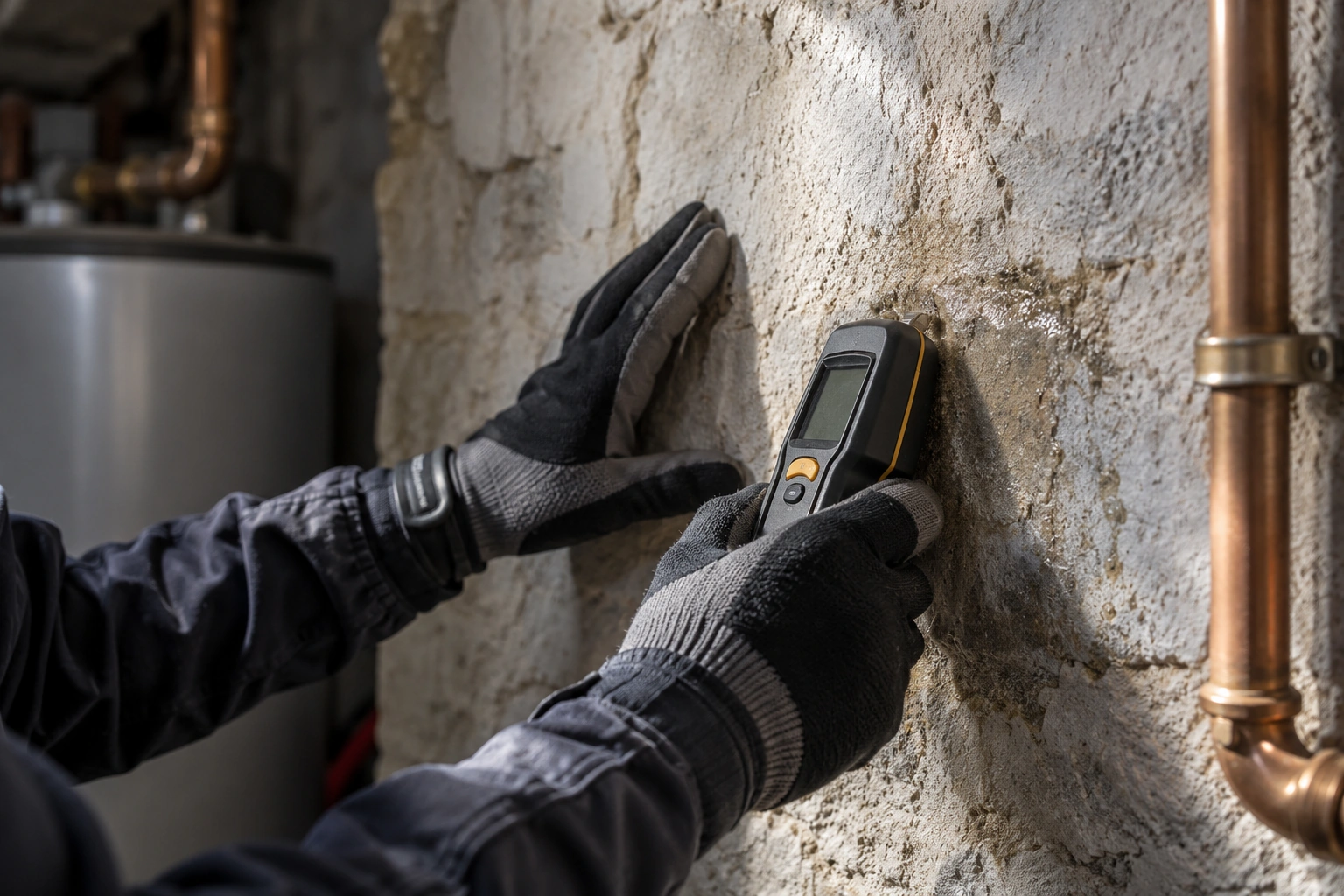
02 · Understand the installation
Where water appears is not always where the fault starts. An accessible connection, a concealed pipe and a shared stack call for different checks. The investigation takes account of the network involved and the access available.
Your observations add context: a constant or intermittent problem, a mark after using an appliance, a noise, or several affected drains. Camera inspection may be discussed for a pipe; it is not required for every situation.
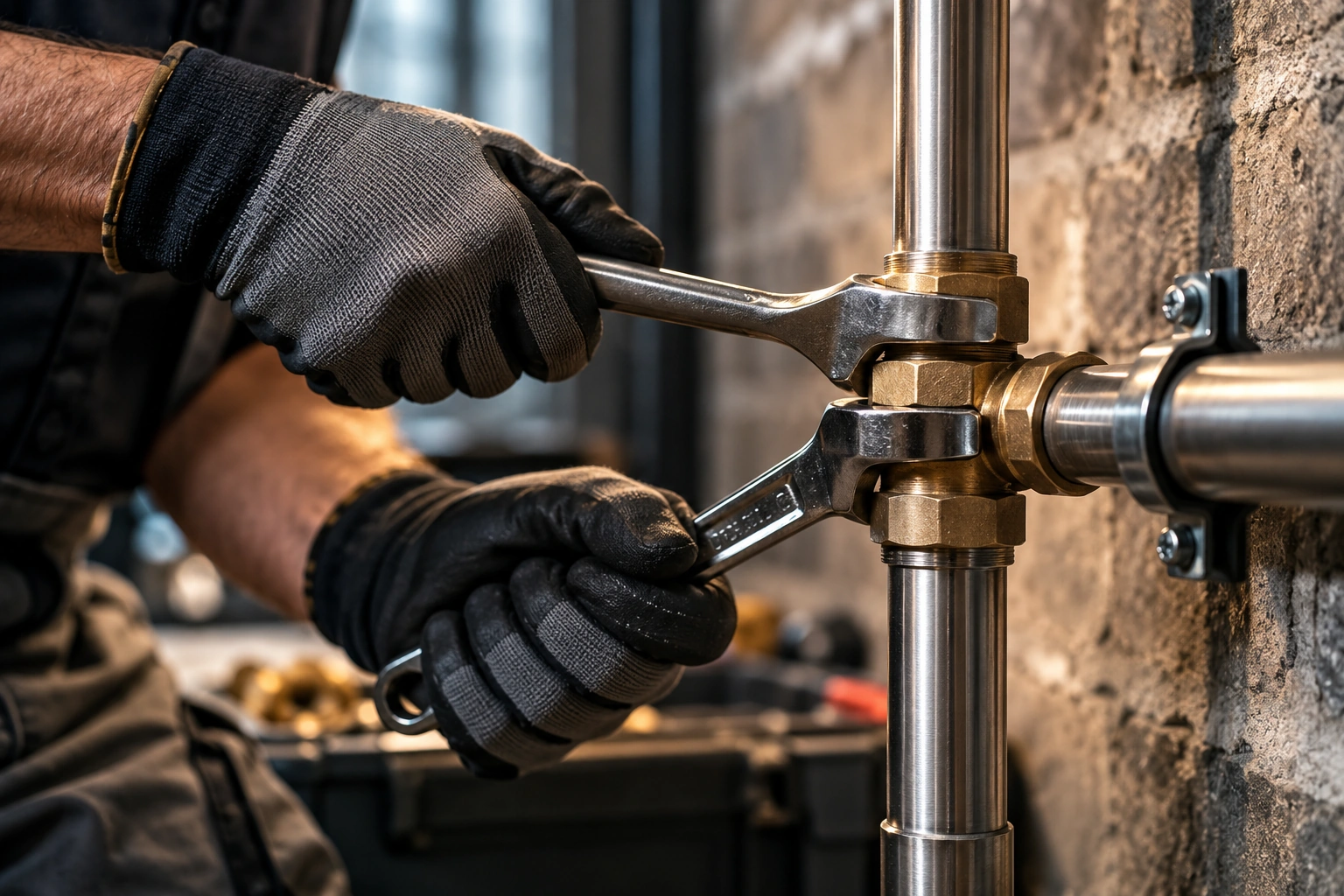
03 · Choose the work
The choice follows the fault identified and the condition of the installation. It may involve repairing a component, adapting a connection, cleaning a pipe or replacing an appliance. These options answer different problems.
Before deciding, consider what stays in place: fittings, the wider network and access. Mention earlier repairs as well. That gives the discussion a concrete starting point beyond the visible symptom alone.
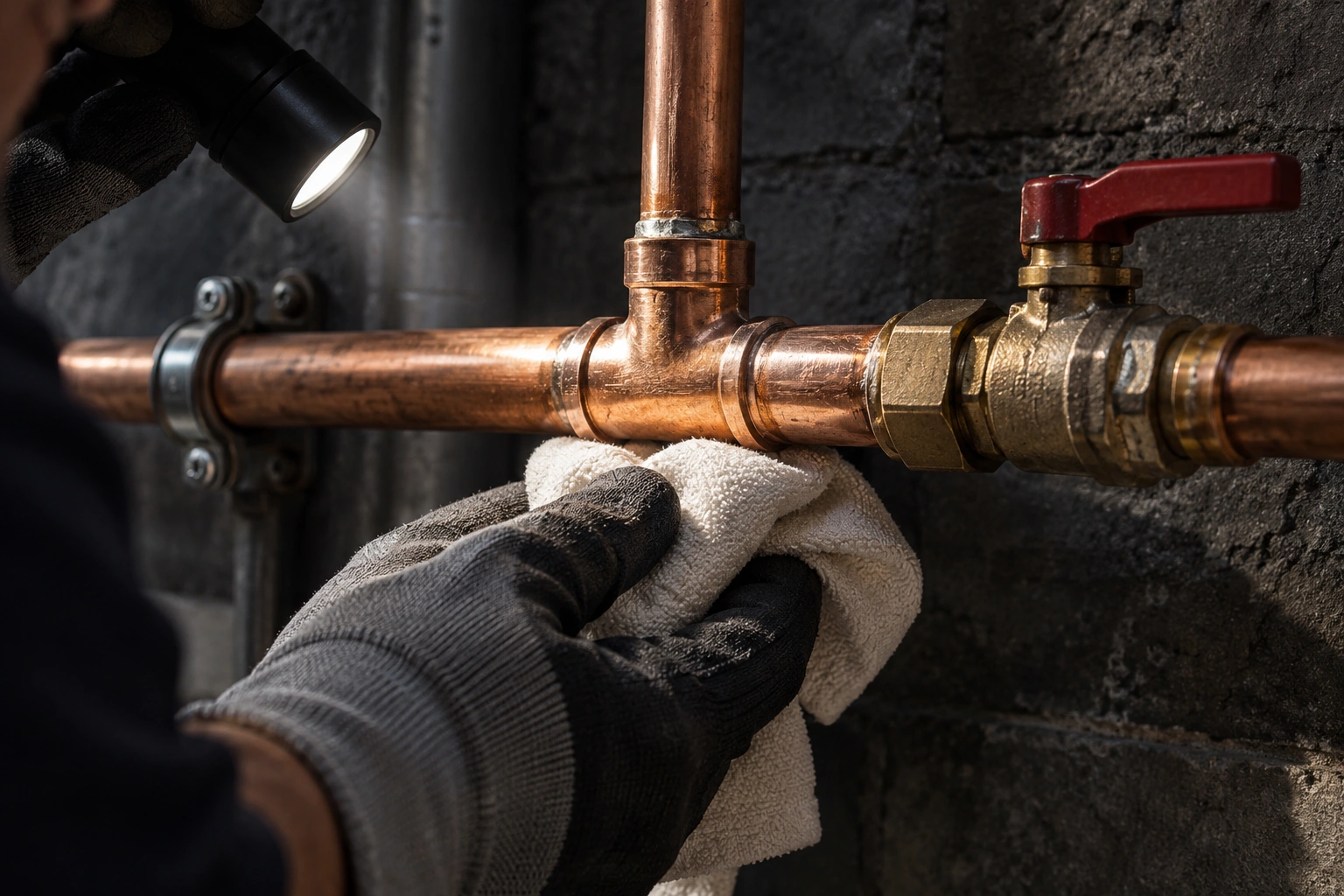
04 · Check
Checks concern the affected component and how it works. Depending on the intervention, that may mean a connection’s watertightness, drainage flow or an appliance’s behaviour. Observations after the work help assess the situation.
If another symptom appears, describe it separately and explain when it occurs. One equipment fault does not necessarily account for every issue in the network. Help with a leak-related insurance file does not determine the insurer’s decision.

05 · What follows
Work takes place in a space used every day. Explain any constraints in your home, building or premises: floor, access to equipment, common areas and the person to contact on site. These details help prepare the intervention.
Keep equipment references and information about earlier work. If the situation changes, they provide a useful starting point for a new conversation. Our Services page also sets out the scope of the activities offered.
Before contacting us
Questions that often arise at the first conversation.
Plombiers Willems · Brussels
An address, the equipment involved and what you have noticed: these first details help prepare your enquiry.